Category: Blog

  • Why Health & Safety Training is Critical in the Workplace:

    Why Health & Safety Training is Critical in the Workplace:

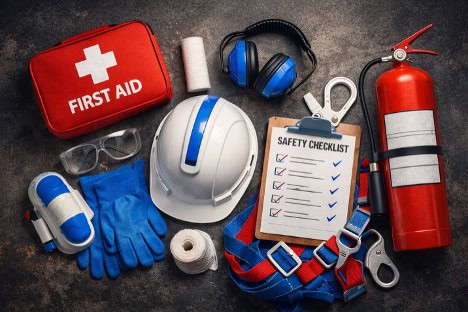
    Creating a safe working environment is one of the most important responsibilities of any employer. Understanding Why Health & Safety Training is Critical in the workplace helps businesses protect employees, reduce incidents and meet legal safety requirements. Proper health and safety training is not just about compliance — it is about preventing injuries, saving lives and maintaining smooth operations.

    At FitMed24, Health and Safety Compliance Training is designed to help organisations improve workplace safety, strengthen OHS compliance and develop a strong safety culture across all levels of staff.

    What Workplace Health & Safety Training Covers:

    Workplace health and safety training equips employees with the knowledge to identify hazards, follow safe procedures and respond correctly during emergencies. These health and safety courses reduce risks and improve awareness in environments where safety is critical.

    Teams trained in occupational health and safety are more confident and prepared — which is exactly Why Health & Safety Training is Critical in the workplace.

    Essential Workplace Safety Courses:

    First Aid Training (Levels 1, 2 & 3):

    First Aid training is one of the most important workplace safety courses. Employees learn CPR, basic life support, and how to respond to injuries. Common searches include first aid, first aid course, CPR training, and first aid certification.

    Basic Firefighting Training:

    Firefighting training teaches fire prevention, extinguisher use, and evacuation procedures. Popular keywords include fire safety, fire training, fire course, and extinguisher training.

    Working at Heights Training:

    Working at heights training helps prevent fall-related injuries by teaching safe use of harnesses and fall protection systems. Frequently searched terms include height safety, heights training, fall protection, and safety harness training.

    SHE Representative Training:

    SHE Representative training prepares safety representatives to support OHS compliance and monitor safe work practices. Common short searches include SHE rep, safety rep, OHS rep, and safety officer training.

    Hazard Identification & Risk Assessment Training:

    This training teaches employees how to recognise hazards and manage risks before incidents occur. Strong search terms include risk assessment training, hazard training, risk course, and HIRA training.

    Benefits of Safety Training:

    Investing in health and safety training helps organisations reduce workplace injuries, improve emergency readiness, strengthen legal compliance, build employee confidence, and lower overall workplace risk.

    Final Thoughts:

    Courses such as First Aid training, Firefighting training, Working at heights training, SHE Representative training, and risk assessment training help create safer, more compliant workplaces. Understanding Why Health & Safety Training is Critical in the workplace allows businesses to protect employees and improve long-term performance.
  • What Employers Need to Know About South Africa’s New Noise Exposure Regulations 2026

    What Employers Need to Know About South Africa’s New Noise Exposure Regulations 2026

    Introduction

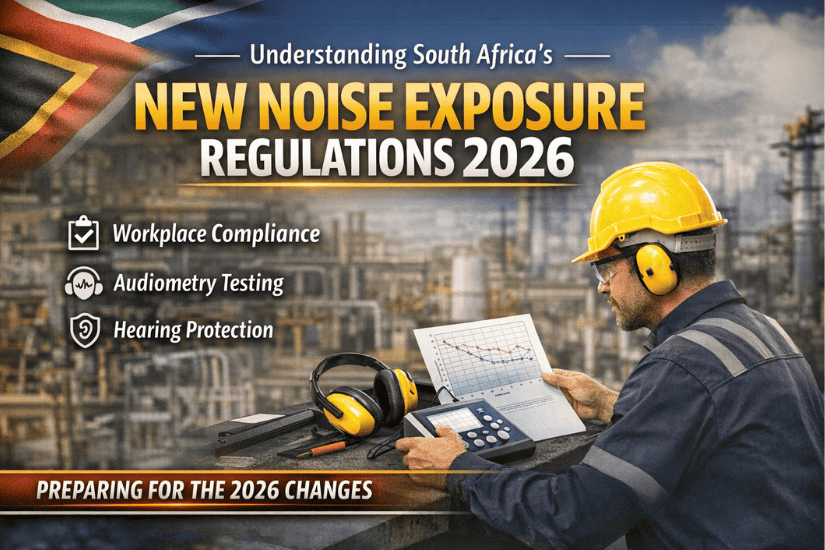
    As South Africa transitions to stronger occupational health and safety requirements, employers must prepare now for compliance with the new Noise Exposure Regulations, 2024 — set to fully take effect on 6 September 2026. These updated regulations replace the old Noise‑Induced Hearing Loss Regulations of 2003 and introduce a modern framework for managing workplace noise, medical surveillance and audiometry. (https://shangoni.co.za/occupational-health-and-safety-act-85-of-1993-noise-exposure-regulations-2024/?utm_source=chatgpt.com)

    Official Government Gazette notice: https://www.gov.za/documents/notices/occupational-health-and-safety-act-regulations-noise-exposure-06-mar-2025

    Key Changes Employers Must Understand

    Stronger, Proactive Regulation

    Who Is Covered?

    These regulations apply to:

    What Employers Must Do

    Training & Information

    Employers must inform and train employees, health and safety reps on:

    Recordkeeping Requirements

    All records relating to noise assessments, monitoring, medical screening and hearing conservation must be kept for 40 years and accessible for inspection. (https://www.webberwentzel.com/News/Pages/recent-amendments-to-the-occupational-health-and-safety-act-new-regulations.aspx?utm_source=chatgpt.com) 

    Transition Deadline

    Previous Noise-Induced Hearing Loss Regulations remain in force until 6 September 2026. After this, new regulations are fully enforceable. (https://www.mondaq.com/southafrica/employee-rights-labour-relations/1596748/occupational-health-and-safety-act-1993-ohasa-physical-agents-regulations-2024-noise-exposure-regulations-2024-and-amendment-of-the-general-safety-regulations-2025?utm_source=chatgpt.com) 

    Practical Compliance Tips

    • – Start Early: Begin risk assessments and audiometry planning now.
    • – Audit Your Processes: Compare programs against the new Code of Practice.
    • – Train Your Team: Ensure SHE practitioners, supervisors, employees understand requirements.
    • – Document Everything: Legal requirement and best practice.

    How Fitmed24 Is Helping Employers Prepare

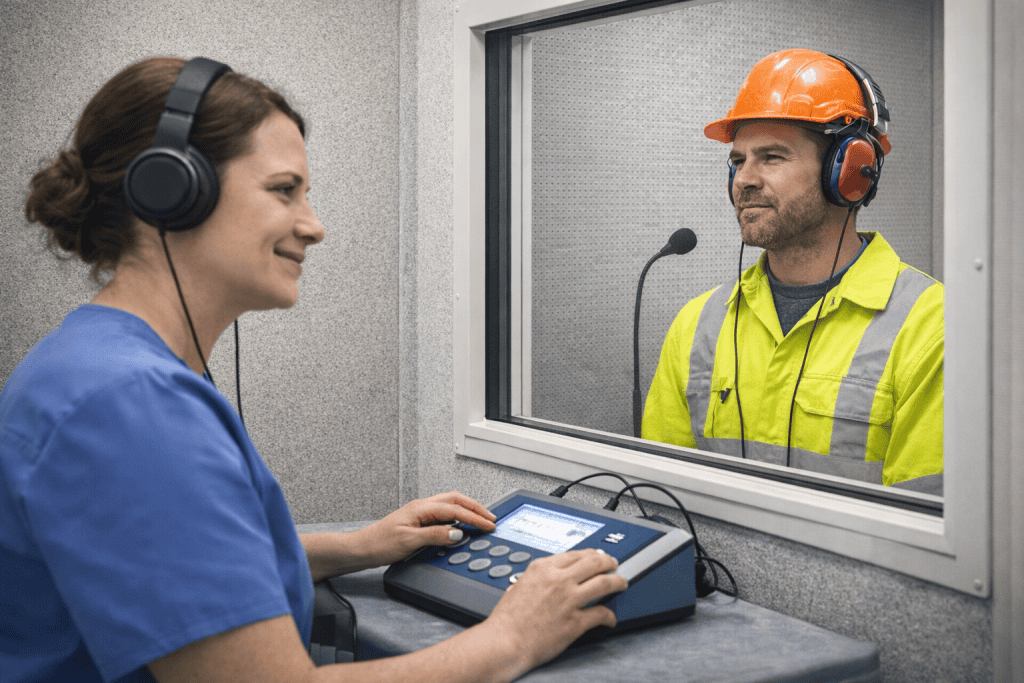
    Fitmed24 is preparing internal training, compliance systems and audiometry tracking tools to help employers meet new Noise Exposure Regulations. Support includes risk assessments, certified audiometry services, and compliance strategy. Fitmed24 is committed to protecting workforce and ensuring compliance.

    Understanding and preparing for the new Noise Exposure Regulations is not just regulatory compliance — it’s sound business and responsible occupational health practice.

  • Mobile Occupational Medicals

    Mobile Occupational Medicals

    Why Choose Mobile Occupational Medicals

    Companies that implement regular occupational medicals enjoy a better work environment overall than those that don’t. Occupational medicals are a legislative requirement, but more than that, they drastically improve the health and safety of staff members. For companies where the staff complement is large, mobile occupational medicals are beneficial, as the required health care is brought directly to the business.

    When you have the option of taking staff members to the local occupational clinic or hiring a mobile clinic to provide services at your premises, we recommend opting for the mobile clinic for various reasons. Here are just a few reasons why your business should make use of mobile occupational medicals:

    • Be Compliant with the Law

    The SA Occupational Health and Safety Act demands that all businesses working with hazardous materials or where physical danger is present carry out medical surveillance and ongoing medical testing. It is the responsibility of the employer to ensure that the working environment does not cause the employees’ health to deteriorate. A mobile occupational medical means that you can stay compliant without having to disrupt your daily operations.

    • Prove Your Loyalty to Your Staff

    Just as it is important to you to have loyal staff members, you need to show your staff members that you are loyal to them and value them. Organising regular mobile occupational medicals ensures that staff members feel appreciated and taken care of. They are also more likely to be more productive when they feel this way. It’s a win-win situation.

    • Put an End to Out-of-Control Absenteeism

    Recurring health problems can be caught early on and treated when regular occupational medicals are carried out. Healthy staff members have no need to be absent from work.

    • Save Time and Money

    To transport groups of staff members to the local clinic will be expensive and also greatly affect the business’s productivity. Mobile occupational medicals help companies stay operational while staff members get their medical assessments done. This saves both time and money.

    • Provide Your Staff Members with Comfort

    While occupational medicals aren’t particularly invasive, some employees might feel anxious or nervous about them. By providing mobile occupational medicals, your staff members can feel more at ease having the medicals carried out in a space that they are familiar and comfortable with.

    At FITMed24, we provide mobile occupational medicals as part of our service offering. To save you time and money, we will come to you. We treat each staff member with warmth and professionalism, and the results of the tests are handled with the utmost discretion. All of our team members are qualified and experienced healthcare practitioners or have worked in the field. You can expect testing to be meticulously carried out and for our staff members to be familiar with the processes involved, thus putting your staff members at ease.

    If you would like to organise mobile occupational medicals for your business, you have come to the right place. To find out more or to book an appointment with us, simply give us a call or send us an email today.

  • Occupational Medicals are Important to Both Workers and Employers

    Occupational Medicals are Important to Both Workers and Employers

    While the many risks to which employees may be exposed whilst at work have long been a concern, the physical ability of workers to conduct the tasks they must perform safely and effectively is a concern that has only been addressed comparatively recently. Part of a much broader campaign to ensure the health and safety of workers, occupational medicals are playing an increasingly important role.

    Many jobs require special skills and experience and, in such cases, an applicant can confirm these by presenting his or her qualifications and references. However, where a post might be more physically demanding and require someone with a high level of fitness, this type of documentation alone will be of little help. In practice, written confirmation of a person’s physical fitness for a given occupation can only be issued by a specialist in the field of occupational health, based on the findings of an appropriate medical examination.

    The particular physical parameters to be evaluated during these examinations will, of course, depend upon the nature of the proposed employment. For example, in the case of a college graduate who is applying for a post as a mining engineer and who may be required to operate in dust-filled underground workings, the efficient respiratory function will be vital. Similarly, a construction worker seeking to earn more money by working at height will need good balance, and so, tests to preclude the possibility of a vestibular disorder, such as Meniere’s disease will be important.

    Naturally, all occupational medicals should address the basics, as well as the more specialised fitness requirements, and they are not only aimed at improving the employee selection process. As stated earlier, many people must work in hazardous environments. Despite efforts to eliminate the associated risks or to reduce them to more acceptable levels, performing periodic physical examinations of at-risk employees is the only way to be certain whether or not the countermeasures in place are sufficiently effective.

    Following the introduction of the Health and Safety Act of 1994, employers in South Africa are now obliged to institute measures to protect their staff. Occupational medicals are, therefore, just as important to employers as they are to their workers, as they can be a means to prevent costly claims for industrial compensation. In addition, healthy workers are generally more productive and happy ones even more so. The knowledge that an employer is concerned about the welfare of workers can be a good way to promote that happiness.

    FITMed24 is a leader in the field and offers clients, nationwide, a broad selection of occupational medicals conducted by a team of specialists with the combined experience of more than 70 years.

  • The Benefits of Work Medicals

    The Benefits of Work Medicals

    Both Employers and Employees Reap the Benefits of Work Medicals

    Under the terms of the Occupational Health and Safety Act, employers in South Africa are obliged to take whatever steps may be necessary to protect their staff from any hazards in the workplace that might present a potential risk. While much of their effort must obviously focus on the detection, evaluation, and mitigation of such hazards, the benefits of conducting work medicals should never be underestimated and, ideally, these should form a basic part of a company’s health and safety programme.

    Like the initial risk assessment, the examination of workers must be performed by personnel with an appropriate qualification in occupational health, in this case, either a medical doctor or a suitably qualified nurse. In addition to their standard professional training, they will have been given the specialist knowledge necessary for this specific type of activity. For example, doctors who undertake to provide companies with the benefits of work medicals will need to be familiar with the workplace surveillance requirements of different industries, such as construction, petroleum and gas, and mining, while nurses must be able to perform hearing, vision, and lung function tests.

    Conducting checks for hazards in the working environment is required under the Department of Labour’s health and safety regulations while monitoring employees’ health is optional. In practice, however, for both employers and employees, there are a number of valuable benefits of introducing work medicals. The fundamental aim of these is to ensure the health of those people upon whom the company depends for its operation and a profitable income. A fit workforce is one of the best ways in which to ensure a company remains as productive as possible. Staff attitudes are also important and, because providing this service is purely voluntary, it can also be seen as an act of caring on the part of management and, as such, it can help to promote loyalty and greater enthusiasm for the job by a happy workforce.

    There are also benefits of work medicals when they form part of the employment process. The results can ensure that a candidate is physically suited to the job, and has the right qualifications and experience. An employer, for example, would not want a typhoid carrier working in a restaurant kitchen or to employ someone with Ménière’s disease to work on a high-rise construction site.

    For those in high-risk occupations, one of the more important benefits of work medicals is that they serve as a screening option to help prevent disabling illnesses, as these could very well result in costly claims for industrial compensation. Including regular hearing tests in the programme, for example, could prevent claims for noise-induced hearing loss.

  • Occupational Medicals Are Important for Several Reasons

    Occupational Medicals Are Important for Several Reasons

    Each year, the South African economy is robbed of billions as a result of absenteeism in the workplace. While a small proportion of those absent may simply be opportunists claiming a day or two off, the majority are either sick or injured. Unfortunately, there are still too many cases in which the origin of those illnesses or injuries can be traced to the workplace itself. It is the latter concern that is now prompting many employers to arrange for occupational medicals.

    The workplace environment can often present health hazards, so legislation requires employers to take steps to identify them. Where a particular hazard is considered to pose a potential threat to the health or safety of their employees, they are legally bound to implement whatever measures may be necessary to protect them. To test the impact of such measures, while monitoring of hazard levels is important, only by conducting relevant occupational medicals in parallel can one be certain that countermeasures taken are sufficiently effective.

    While fluctuating market demands, competitor’s strategies, and fluctuations in exchange rates can all have a negative impact on the performance of a business, absenteeism is at least as damaging, if not more. That said, unlike the other factors, it is one that can be controlled. The simple precaution of determining whether or not an employee’s health might be threatened by the job they are required to perform could make a huge difference to a company’s productivity. Occupational medicals could spell the difference between paying a staff member for doing their job and paying for non-productive sick leave and possibly even for a temporary replacement. So, what do these examinations consist of?

    The clue is in the name. As part of an ongoing monitoring programme, these examinations focus on any relevant physical manifestations that might be the result of a worker’s occupation. The content of these examinations must, therefore, relate directly to the nature of the job. So, for example, in the case of miners and others who work in a dust-filled atmosphere, tests of respiratory function will feature prominently in occupational medicals. Similarly, workers who are regularly exposed to extreme levels of ambient noise might be given an audiological examination. 

    The same criteria can also be applied as part of the recruitment process. As well as possessing the appropriate experience and qualifications, where relevant, it is reassuring to know that a candidate is physically suited to their proposed duties. Accordingly, there are specialised occupational medicals for those in the food-and-beverage industry, construction workers, and drivers of heavy vehicles, as well as screening for general wellness in the workplace.

  • Occupational Health Is the Key to A Productive Workforce

    Occupational Health Is the Key to A Productive Workforce

    Sickness in South Africa’s workforce is responsible for losses to our economy totalling billions every year. That said, the costly consequences of much of the illnesses and injuries responsible could actually be avoided. In fact, it was for just this purpose that the Department of Labour introduced the legislation entrenched in the Occupational Health and Safety Act of 1993. Basically, the act requires employers, in close collaboration with their employees, to implement whatever measures may be necessary to create and to maintain a workplace that is safe and which poses no risk to the health of the staff.

    This, however, is a task for which most employers do not have the necessary knowledge and experience, so the government also introduced special training courses to remedy this shortfall. While the training is open to the nation’s employers and their staff, many companies prefer to allocate all or part of the responsibility for matters concerning occupational health and safety to suitably qualified third parties.

    It is the responsibility of companies to provide safe working conditions and for assistance, they will frequently recruit the technical expertise of those trained in the field of industrial hygiene. As the title suggests, their role is a form of cleansing. They locate and evaluate the potential risks associated with workplace hazards and recommend remedial measures. Their effectiveness can be reviewed by government inspectors at any time. In parallel, medical examinations designed for all at-risk workers may be undertaken by doctors, nurses, and other qualified medical professionals with a specialist qualifications in the field of occupational health.

    The content of these medicals varies according to the nature of the job and the potential hazards it may hold. For example, the composition of an examination recommended for an underground worker in the mining industry will differ in its scope from that considered appropriate for an airline pilot. For construction workers, and particularly those required to work at height, the content will differ yet again.

    Work-related illness is not always accompanied by visible symptoms and workers can be unfit to perform their duties while appearing healthy. Often it is only an occupational-health medical examination that will reveal this. Those required to drive vehicles, often for long distances, are a classic example. Statistics in South Africa suggest that a third of all road accidents involve people who drive for a living and, in many cases, they are due to health issues arising directly from the demands of the job. Much the same risks also apply to those who operate heavy construction vehicles and machinery.

    Whether on the open road or the factory floor, the safety of workers and those around them depends as much on their physical ability to perform effectively as on the knowledge and skill required. An occupational-health specialist has undergone the training required to detect what a family doctor might not. Job-related examinations conducted by these specialists may include assessment of musculoskeletal function, spirometry, audiometry, vision and colour-vision tests, blood-pressure measurements, urinalysis, and eve mental-health assessment. 

    In addition, FITMed24, one of South Africa’s leading occupational-health services providers, operates workplace-wellness days that combine health advice with less comprehensive testing, including cholesterol, glucose and vision screening, blood pressure, pulse, and BMI measurement.

  • Continue your operations with the help of daily medical screening intervention

    Continue your operations with the help of daily medical screening intervention

    Many companies are implementing a total “shutout” of outsourced services and visitors to avoid contagions such as COVID -19 being imported into the workplace. This action is affecting their day to day business operations. Unfortunately, companies are not fully aware of protocols that can be implemented to safeguard employees and visitors to ensure continued uninterrupted operations. 
    Access Decontamination & Screening Point ServicesA COVID-19 outbreak within your company could lead to mass staff absenteeism and could cause the company to shut down completely. If pre-emptive medical intervention measures are not implemented at access points it could result in possible outbreak and closure of the business. The Department of Labour has developed and issued a COVID-19 guideline dated 17 March 2020. (Attached below)FITMed24 mobile unit and nurses are currently in high demand to assist clients with the daily screening of employees for possible viral and respiratory infection symptom identification. Our nurses are trained to conduct physiological examinations on employees and visitors before entering the workplace to ensure they present no symptoms of viral infection and are decontaminated before entering the site. These daily physiological examinations conducted by the nurse before employees enter the workplace are the best and most effective way to safeguard the integrity of the workforce.
    Providing safe and secure onsite medicals
    In-office protocol – Should FITMed24 conduct medicals within a dedicated office provided by the client, decontamination will be conducted by the FITMed24 team before medicals proceed. Note the FITMed24 team arrives pre- decontaminated before entering your premises. 
    Mobile unit protocol – FITMed’s mobile unit is decontaminated before to arrival on-site. When on-site the mobile unit is fogged with antibacterial spray (99.9%) every hour to eliminate all airborne microbes and to maintain a sterile zone whilst employees undergo their medicals. 

    Herewith is a link to Department of Employment and Labour unveil guidelines to deal with COVID-19 at workplaces
     

  • Stress – Affecting Productivity at Work

    Stress – Affecting Productivity at Work

    Stress – Affecting Productivity at Work. We all experience it at some point. Some more than others, and some more acutely than others. For many people, a certain amount of stress is important in order for them to remain focused and determined to achieve. For others, even small amounts of stress can have a negative impact on their productivity – stress can lead to panic and unstructured working. Mistakes are made so simple tasks take longer to complete. And then, for some, prolonged stress can ultimately cause illness, which often puts an end to anything being achieved at all.

    Whilst individuals have a major role to play in ensuring that they don’t overdo it and let stress get the better of them, it’s not always possible for people to step back sufficiently from stressful situations in order to take stock, become aware of their escalating stress levels, and make the necessary changes. By definition, people who are stressed at work are those who feel they are struggling to manage, for whatever reason. Perhaps they have important work deadlines to meet, or they want to impress a new boss, or fear for their job security so don’t want to admit defeat. These people are the least likely to step back from their work voluntarily, appraise the situation, and take the necessary action (i.e. slowing down and admitting that they can’t manage everything). Staff who are dealing with difficult issues outside of work often have less resilience to cope with problems and challenges at work.

    So, it’s down to managers and employers to step in, where necessary. But many managers and employers question how they can support employees to help them keep on top of their own health and wellbeing whilst they’re busy grappling with the issues that are often most important to them, such as productivity, profitability and remain competitive. But the fact is that if staff are feeling stressed and pressured, they probably aren’t working to the best of their ability, so it’s of no benefit to organisations for staff to be pushed to their limits, and beyond. Customer service and productivity may well drop, and mistakes and discontent may increase – and this certainly isn’t what organisations should be aspiring to.

    Good communication within the workplace is essential to ensure managers recognise and are quick to put measures in place for those who are struggling.

    Call FITMed24 to set up staff medicals to help manage the negative effects of stress. 

  • Three Benefits of doing Employee Medicals?

    Three Benefits of doing Employee Medicals?

    Employee Medicals have the potential to benefit both employees and the organisations they work for:

    • They offer lasting benefits to employees. A worker may be helped to overcome a niggling health problem or the tests may capture potentially more serious health issues early when they are easier to treat.
    • Lifestyle advise and support (e.g. advice about smoking cessation) can reap long-term life-enhancing benefits.
    • An organisation would benefit from supporting the health and wellbeing of the workforce, with the potential for lower levels of sickness and absenteeism. Fitter workers may also concentrate better and have higher levels of productivity too.

    An organisation’s workforce is its most important asset, so it makes sense for managers to do what can be done to detect illness and promote health and wellbeing. And keeping employees healthy and productive arguably makes sound financial sense. There are a number of different forms of employee health screening, including:

    • Full physical examination
    • Vision test
    • Audiometry test
    • Spirometry test.

    Full Physical Examination comprises of a combination of tests, which aim to give an individual a general overview of their health status and help to detect disease or risk factors early. Any issues can then be followed up with a GP, which is important as many people may suspect that they have a health issue but have not undergone medical tests. 

    The World Health Organisation (WHO) identifies eight key risks factors to health, all of which could be addressed in a health check:

    • Smoking.
    • Drinking alcohol.
    • Obesity.
    • High blood pressure.
    • High cholesterol.
    • High blood glucose.
    • Poor diet.
    • Lack of exercise.

    Medicals are provided as part of occupational health provision but should always be carried out by trained professionals who can offer good advice on the next steps, as necessary. Furthermore, employees should be reassured that the results of tests will remain confidential.

    Any group screening should also involve a report to the organisation with health trends across the workforce, average levels of health and fitness compared to national averages, etc. so that the company can review its working practices and use the information to improve the working environment.

    There are a number of possible approaches to health checks, Clinic Medicals or the use of the mobile medical facility. Organisations should choose the best option for them based on a number of factors, e.g. the size of the organisation, cost implications, the type of business and the pattern of work of employees. 

    Employee Medicals offer a variety of benefits both for organisations and the individuals who work for them.

    Benefits to individuals:

    • Access to health information.
    • Reduced health risks.
    • Improved performance.
    • Better mental health.

    Benefits to organisations:

    • Reduced sickness absence levels.
    • Greater staff satisfaction.
    • Reduced turnover of staff.
    • Improved productivity.
    • Improved morale and loyalty amongst employees – health screening demonstrates that employers care about their staff and are dedicated to helping them stay healthy.
    • Improved team-working.

    Trust FITMed24 with your Employee Medicals