Category: Blog

  • Why is workplace safety important and why ? – Noise pollution

    Why is workplace safety important and why ? – Noise pollution

    Excessive noise levels over a long period of time will damage your hearing. This may happen so gradually and painlessly that you may not notice the minor deterioration from one day to the next. Excessive noise in the workplace presents a risk of hearing damage and other health problems.

    The parts of the ear that process high frequency sounds are usually the first to be affected. The degree of hearing loss depends on the loudness of the noise and how long you are exposed to it. Sudden explosive sounds, such as gunshots, can cause immediate damage. 

    Some people exposed to excessive noise develop tinnitus, which is described as a constant ringing sound. For most cases of noise-induced hearing loss, there is no cure. Hearing aids only amplify sounds and can’t replace normal hearing.

    Associated effects of constant noise pollution

    Apart from damage to hearing, exposure to constant and excessive noise can cause other health problems including:

    • headache
    • elevated blood pressure
    • fatigue
    • irritability
    • digestive disorders
    • increased susceptibility to colds and other minor infections.

    Dangerous decibels

    The loudness of noise is measured in decibels. Sensitivity to noise differs from one individual to the next, but experts believe that damage to hearing occurs when noise levels are higher than 85 decibels, which is about the loudness of heavy traffic. 

    The risk of hearing loss increases as the noise becomes louder. Length of exposure is important too. For example, it is not recommended to listen to noises of 109 decibels for any longer than two minutes at a time. 

    If you have to raise your voice or shout to be heard, or if your ears ring or sounds seem muffled afterwards, then the noise level was too loud and harmful.

    Reducing noise pollution in the workplace

    Noise levels can be measured using a sound level meter, which detects the pressure of sound waves as they move through the air. 

    Reducing exposure to excessive noise in the workplace can be accomplished in many different ways: 

    • Change or modify equipment.
    • Locate the equipment in a more isolated area, or soundproof the room.
    • Make sure that people spend time working in quiet areas too.
    • Try to run noisy equipment early or late in the day when fewer people will be exposed.
    • Use personal hearing protection such as ear plugs or ear muffs.

    Medical Surveillance

    The employer needs to establish and maintain a system of medical surveillance of all employees exposed at or above the noise-rating limit. They must ensure medical surveillance programme:

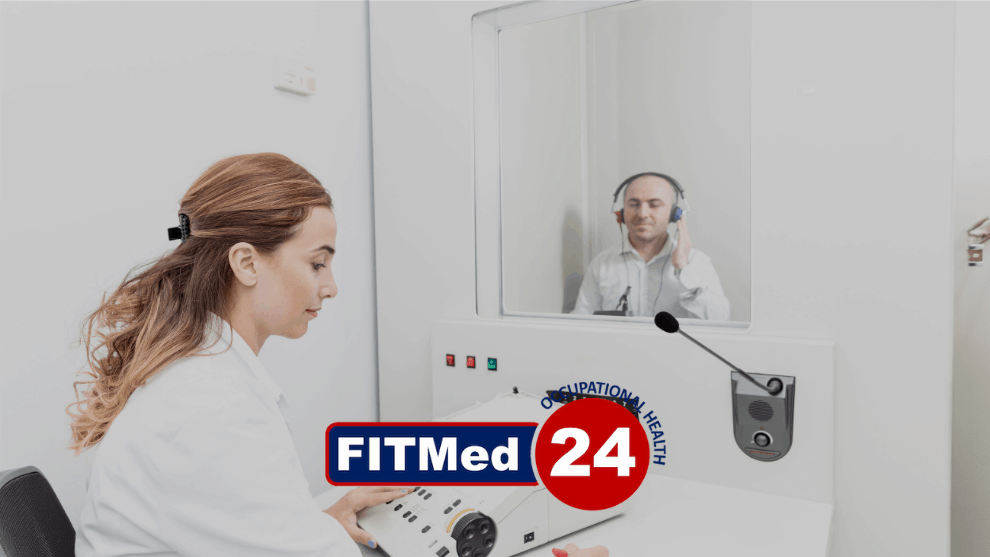
    • Consists of a baseline audiogram which is recorded before and employee commences or with 30 days of employment. 
    • Periodic audiogram completed at least annually for all employees, and employees working in noise exposure zones where the exposure equals or exceeds the 105 dB(A) 6 monthly.
    • Exit Audiogram for employees moved or left employment.
    • Tests must be performed by a competent person, such as FITMed24.
  • Responsible Person Crisis Management Training Certificate

    Responsible Person Crisis Management Training Certificate

    With the development of the “Responsible Person Crisis Management Training Certificate,” it gives businesses and their employees to deal with the COVID-19 virus in the workplace. Our employees are the first and last point of contact when entering and exiting a facility. These officers are most vulnerable to contracting viruses through people they come into contact with on a daily basis.
    The Department of labour has appealed to employers who have not prepared for pandemic events to prepare themselves and their workers as far in advance as possible of potentially worsening COVID -19 outbreak conditions. The Department advises employers to “go back to basics” by conducting a hazard identification and risk assessments to determine the level of risk exposure and communicate these steps to all workers. 
    FITMed24 will be running a workshop for security officers responsible for the roll-out of COVID-19 protocols for their organizations

    The Responsible Person Crisis Management Training Certificate course content covered is as follows: 

    1. Understanding Coronaviruses
    2. What is known about the Coronavirus
    3. Origins of the virus
    4. Transmission of respiratory diseases in the workplace 
    5. Who is most affected?
    6. Symptoms of the virus to look out for 
    7. Infection gateways
    8. Making the workplace a sterile zone
    9. Self-awareness and decontamination practices
    10. The minimum PPE requirement for front line employees
    11. Dangers to employees with existing diseases
    12. Implementing pedestrian and drive through choke points in the workplace to minimise the Risk
    13. Enforcement of decontamination procedures
    14. Decontamination of Vehicles in a designated open area
    15. Daily toolbox talks
    16. Crisis Management
    17. Onsite medical Intervention
    18. What is a Crisis Communication Plan?
    19. Crisis Communication Strategies
    20. Case Escalation
    21. Isolation and the Designated Isolation Area
    22. Social Media Response

    Don’t put your business at risk during the pandemic that has hit the world and visit FITMed24 Online Training Centre and get your Responsible Person Crisis Management Training Certificate today. It is free of charge for a specific period.

  • Occupational Medical and the Law

    Occupational Medical and the Law

    “Do we have to do it?”

    YES!

    “The Occupational Health and Safety Act 85 of 1993 applies to everyone in South Africa, who is working. The application of the Act is not limited to factories, manufacturing plants and construction sites. Occupational medicals are equally not limited to those working in workshops, manufacturing plant and construction sites, and it applies to all working environments.

    “As Employers, what do we have to do?’

     It is the employer’s duty to provide and maintain a working environment free of risk to the health and safety of employees. Remember, this includes all employees, even where the workplace risks and hazards may not be so evident or obvious.

    “What does the law say?”

     Section 8 (1) of the Occupational Health and Safety Act mentioned above set the following requirement:

     “General duties of employers to their employees 

     (1) Every employer shall provide and maintain, as far as is reasonably practicable, a working environment that is safe and without risk to the health of his employees”.

     Section 9 of the Act set the following requirement:

     “General duties of employers and self-employed persons to persons other than their employees

     (1) Every employer shall conduct his undertaking in such a manner as to ensure, as far as is reasonably practicable, that persons other than those in his employment who may be directly affected by his activities are not thereby exposed to hazards to their health or safety”.

     “What about Occupational medicals?” 

     As employers, it is our duty to look after the health & safety and wellbeing of all employees employed by ourselves.

     An employee working in an office or on the road might not be exposed to the types of hazards that an employee is exposed to in a mechanical workshop. Yet an office can be full of hazards, for example, electrical outlets, administrative equipment and slippery floors, being on the road travelling have many, many hazards and inherent dangers. All employees need to be medically fit, both physically and psychologically for the job and type of work they employed to do. An employee may not be aware of a medical condition they might have or could develop later that could be a risk within the workplace.

     A programme of regular medicals is a good way of protecting oneself against any possible legal liability suits. The cost in prevention far out ways the possible consequences of not doing it.

     “There are different types of medicals?”

    • Pre-employment medical
    • Annual occupational medical 
    • Exit medicals 

    These should all form part of your employee health 

    monitoring programme.

     “So anybody can do these medicals?” – NO!!

     Only a registered Occupational Medical Practitioner with the Health Professions Council may conduct such medicals. This is a requirement in terms of Section 17 of the Health Professions Act 56 of 1974.

    “Where do I start and who can help me.”

    Contact us at FITMed24.com.:

    Phone us 010 023 4087 or 072 259 8069

    Email:  helpdesk@fitmed24.com

    Visit : Contact Page

    We have qualified medical professionals, experienced in the provision of monitoring, screening, and exit medical testing services. We offer our services to organisations in various industries, ranging from mining and construction to pharmaceutical, chemical and processing plants. Whether you operate within the aviation, medical, chemical or mining sector, we understand and apply the right protocols to ensure that your employees meet the exiting medical requirements. Our team can evaluate your firm’s specific site risks and assist in designing the set of protocols for protection, prevention and monitoring of employee health, including the completion of exit medicals.

    Ensure full compliance with labour and occupational health laws of South Africa and minimise risk to your firm. Make use of the services as offered by FITMed24 to ensure accurate and compliant exit medicals. 

    Note that the above information is provided for informational purposes only and should not be regarded as legal or medical advice.

  • What is Occupational Health & Safety

    What is Occupational Health & Safety

    An Overview of Occupational Health and Safety in South Africa

    While the potential dangers to which some workers were exposed when performing their designated tasks were recognised even by the ancient Greeks and Romans, attempts to protect them from such hazards were limited by the technology of the times. Even with the knowledge of such dangers, it was many centuries before any occupational health and safety regulations that were intended to protect those employees who are exposed to workplace hazards were eventually introduced into law. Today, the employers in most of the industrialised nations are now bound by such legislation.

    It was during the First World War years that the South African government first expressed its concern regarding the high rate of serious injuries in the workplace, which led to the Factories Act of 1918. It was later replaced by the Factories, Machinery and Building Work Act of 1941, imposing certain responsibilities and duties on those who used machinery, occupied factories, or undertook building projects. Today, the occupational health and safety requirements with which local employers are required to comply are both stricter and more far-reaching, following the introduction of a new act in 1993.

    Other, more industry-specific acts followed detailing safety requirements for mines, railways, civil aviation, and maritime occupations followed during the course of the next two decades. In essence, the legislation these various acts introduced placed the onus on employers to take steps to provide a safe working environment. To do so, a workplace assessment must be performed by an accredited occupational health and safety professional to identify any potential hazards; evaluate the extent of the risk these may pose; review the effectiveness of current precautionary measures, and to recommend any improvements that may be deemed necessary. The employer is then given sufficient time to act on those recommendations before a further assessment is conducted.

    During an occupational health and safety assessment, attention may be paid to physical, chemical, biological, and even ergonomic hazards. Physical threats might include noise, vibration, or radiation, depending on the workplace activities, while water and air sampling may be required to identify harmful chemicals or microorganisms where appropriate.

    Somewhat surprisingly, perhaps these acts do not mandate medical examination of those workers who routinely operate in potentially hazardous conditions. However, it is in the interest of employers to see that workplace medicals are made available to them. Like the inspections, these can only be undertaken by personnel who possess a recognised occupational health and safety qualification. So, why should these examinations be considered important?

    Where risks are known to exist, even though precautions are in place, conducting regular staff medicals can offer reassurance that these are adequate, and that staff are actually complying with them. Also, when reviewing applicants for a physically demanding or specialised occupation, this can help to determine whether a candidate meets the physical requirements of the job in addition to possessing the necessary skills and experience.

    Monitoring the health of employees is not only in their best interest, but it is also a good business decision. Implementing staff medicals as a part of the company’s occupational health and safety programme can help to ensure a healthy, productive workforce while also serving to minimise the risk of crippling industrial compensation claims. Talk to FITMed24 about how best to ensure the health of your workers.

  • THE VALUE OF OCCUPATIONAL MEDICALS

    THE VALUE OF OCCUPATIONAL MEDICALS

    EXPLORING THE VALUE OF OCCUPATIONAL MEDICALS

    While most people will only pay a visit to their doctor when they are in pain or feeling unwell, others tend to favour a more pre-emptive approach in which they choose to book a more in-depth physical check-up once or twice a year, a sort of roadworthy test for the body. There is a lot to be said for the latter approach, a fact that is made apparent by the growing tendency among employers to arrange for their staff to undergo occupational medicals.

    These, however, are not the sort of routine examinations typically conducted by a general practitioner. In practice, they may only be carried out by personnel who have undergone the appropriate training and have obtained a recognised qualification in the field of occupational health. Those involved include physicians, nurses, and other healthcare professionals. Often, a small company will rely on a suitably qualified nurse and a part-time doctor to provide its occupational medicals, while larger companies will tend to prefer the support of a specialist organisation to conduct such services.

    In addition to fielding staff with the appropriate qualifications and accreditation, one of the most important requirements for these companies is to have in-depth knowledge and experience of a wide range of industries and the tasks associated with them. Although all of the examinations they perform will have many features in common, certain activities require unique physical qualities that will need to be evaluated. This is precisely why these examinations are known as occupational medicals and why they should only be carried out by those with the relevant knowledge.

    In most cases, these examinations can be carried out on the employer’s premises and should not result in any significant interruption to the normal flow of work. A reputable service provider is certain to have a mobile facility to ensure that the bulk of the tests considered relevant to any given industry can be completed on-site without calling upon its external facilities.

    Among the investigations common to all occupational medicals are blood pressure measurements and a variety of routine blood and urine tests. Where necessary, these will be further supplemented by more specialized examinations, such as X-rays, ECG, spirometry, audiometry, evaluation of vestibular function, and any others that may be seen as directly or indirectly relevant to a given subject’s fitness to perform his or her designated tasks.  

    Occupational medicals are a form of insurance, not just for employees, but also for employers. A healthy workforce is a productive one and, when an employer is seen to show concern for his or her workers’ health, this is a surefire recipe for inspiring loyalty and boosting internal relations, as well as reducing costly staff turnover.

  • The Evolutionary Benefits Of Occupational Health

    The Evolutionary Benefits Of Occupational Health

    The Evolution of Occupational Health and Its Valuable Benefits

    While most of us tend to believe that concerns over matters, such as sanitation, safe working conditions, and occupational health, are all products of our modern civilisation, each of these has its origins in the distant past. There is abundant archaeological evidence to support this, dating back almost 4 000 years. At the same time, concerns over the impact of work on health were already being addressed by icons, such as the Greek physician, Hippocrates, who recognised the importance of clean air and water, and Galen, an official physician to Rome’s gladiatorial combatants.

    Over the centuries, others have seen the need to provide workers with various forms of protection, such as masks to limit the inhalation of dust particles. However, only with the vastly improved understanding of illness and its multiple causes did the evolution of the advanced occupational health services we enjoy today become possible. 

    However, before any effective preventative measures could be introduced, it was first necessary to develop the technology with which to do so. Consequently, while concerns over the appalling living and working conditions to which workers were subjected had become widespread by the middle of the nineteenth century, it took almost another century before anything remotely resembling the services provided by the doctors, nurses, and other therapists responsible for occupational health today finally became available.

    At this time, in fact, the emphasis was more on workplace safety, such as the prevention of injuries and limiting the risks posed by hazards, such as toxic chemicals and dust particles in the air, rather than actually examining workers for evidence of illness that might have been caused by factors within the working environment. Only in 1983, when the government of South Africa passed legislation covering safety in the workplace, did similar concerns for occupational health begin to translate into positive action. 

    Though necessary, the training of technical experts to inspect factories and other businesses for possible hazards and to evaluate or provide advice about suitable protective measures became just one part of a two-part initiative. The second was to train medical personnel, including doctors, nurses, and other therapists, to conduct specialised examinations for evidence of work-related illnesses. This role has gradually become extended and, today, these occupational health specialists are also called upon to assess the physical suitability of employees to undertake certain tasks to determine whether workers are fit to return to work following an accident or injury.

    In addition, these specialists are often called upon to check on the medical status of employees at the time of joining a company and when retiring or resigning their posts. This provides the means to preclude any condition that might lead to a claim for worker’s compensation. When examinations of those known to be at risk are carried out at regular intervals, it allows early detection and treatment of any problems detected, whether work-related or not. 

    Arranging for staff to undergo periodic examinations by occupational health physicians and nurses is clear evidence of concern on the part of an employer, an observation that can help to boost morale and, in turn, productivity. If you would like to be sure that your workforce is healthy, happy, and productive, why not give FITMed24 a call?

  • Mobile Medical Clinics

    Mobile Medical Clinics

    Mobile Medical Clinics for Your Workforce

    If the thought of arranging company medicals is daunting for you, rest assured that you feel much the same as thousands of other South African business owners and managers. Not only are medicals a schlep to arrange, but they can also cost a lot. With this in mind, FITMed24 has challenged the industry to step up its game by offering mobile medical clinics that carry out medical assessments affordable prices. Get a quote today by making contact with us either

    This particular service brings both convenience and affordability to companies that cannot afford the downtime that follows transporting staff members to medical facilities to have their assessments. It is also ideal for those who cannot afford to have their own in-house medical clinic (which is not an affordable option for South African businesses).

    One of the things that you should check when comparing the services and rates of mobile medical clinics is their credentials. It’s best for professional nurses and qualified medical professionals to handle the tests, assessments, and reports, if you want a thorough and true reflection of the health of your workforce. Cutting corners will only cost your company in the long run. At FITMed24, we only employ professional and qualified occupational doctors, general practitioners, and registered nurses. All of our healthcare professionals are registered with the HPCSA (Health Professions Council of South Africa), the SASOHN (South African Society of Occupational Health Nursing Practitioners), and the SANC (South African Nursing Council).

    With more than 20 years of experience in the health sector, we have absolute confidence that our mobile medical clinics are more than equipped to carry out your medical assessments effectively. We have supplied mobile medical clinics to a variety of industries, including construction, mining, fuel, gas, and even chemical manufacturing.

    The health of your workforce should be your number one priority for your business. After all, your employees are the future and current driving force behind your business’s success. If you currently work with another medical service provider, we challenge you to compare our service to theirs. We offer a scale payment system where the more medicals you do per year, the cheaper your rate will become. We offer free accredited health and safety training, including firefighting, first aid, and SHE representative training for our Blue Chip customers who sign up for our services with our product “GENESIS”.. We also offer our clients free HIV testing with every mobile medical clinic that we host. That’s not all though. Our mobile medical clinics will not disrupt your workflow unnecessarily, and we guarantee a quality, ethical, and thorough service each and every time.

    For more information about our mobile medical clinics, give us a call or send us an email today.

  • Why Your Business Needs Up-To-Date Occupational Medicals

    Why Your Business Needs Up-To-Date Occupational Medicals

    If you have been wondering why occupational medicals are important for your business, we’re here to tell you. Carrying out regular medical tests and surveillance at work is not just a wise thing to do because the Occupational Health and Safety Act legally requires employers to do so. While being compliant with the law is an important motivating factor, it’s not the only one. Other important reasons to ensure that your employees’ occupational medicals are up to date is to guarantee minimal downtime for your business and to protect the wellbeing of your staff. Your workforce is the beating heart of your business and without its health and strength, your business’s full potential will simply not be reached.


    Medicals can come in many varieties and forms. Whether you need medical testing done on the move, fit-for-duty tests carried out, or even risk-based medical surveillance done, we can assist you. Medical testing and monitoring can be offered for pre-placement situations, as well as for exit situations and ongoing employment. The point is not to rid the workplace of those who are negatively impacted by the working environment; it is to ensure that employees are provided with the correct safety mechanisms to protect their health and to ensure ongoing, long-term employment with the business. It’s a win-win for all parties involved.

    When opting for occupational medicals to be carried out, they can be done at the providing company’s premises, or on-site at your own (which is often preferred in work environments where downtime can quickly have a detrimental effect on productivity). It’s best to choose a company that is recognised in your area, and that has the experience, specialised equipment and medical professionals available to carry out testing and monitoring, and to translate the information gathered professionally and accurately.

    At FITMed24, we offer medical testing and surveillance services to companies operating in all industries. Our equipment, which is well maintained, is SABS approved and holds international accreditation, while also adhering to international standards with the relevant authorities. In order for your occupational medicals to be of value to your company, you need to have them carried out correctly, with the right equipment and the best, qualified professionals. At FITMed24, you are guaranteed of exactly that.

    If you would like to learn more about the process involved in carrying out occupational medicals or would like to book one of our services with us, kindly contact us. 

  • The Scope of Occupational Health Services

    The Scope of Occupational Health Services

    The role of those responsible for ensuring health and safety in the workplace, now commonly described as industrial hygiene, is to identify potential hazards and to institute measures to ensure that any threat posed to workers is eliminated or kept within acceptable limits. By contrast, the focus of occupational health services is more about establishing the fitness of a worker to perform his or her designated tasks. Not to be confused with proficiency testing, in this case, it is the physical suitability of an employee to undertake a given task that these services are intended to evaluate.

    The conditions under which workers are required to perform can vary quite widely, and part of ensuring their health and safety at work is to make quite certain that they are physically equipped to handle those conditions. For example, should an employer wish to hire staff to work in a food processing plant, the role of an occupational health services specialist would be to examine the prospective employees for any evidence that one of them could be a symptomless carrier of E.coli or some other potential gastrointestinal pathogen.

    In a similar vein, imagine the consequences of hiring a construction worker who, at some stage. is required to work on the upper level of a high-rise building, should that worker fall and become seriously injured or worse. A straightforward mistake due to carelessness would be bad enough, but what if that worker experienced severe vertigo and lost balance? It is precisely to prevent occurrences, such as this, that occupational health services are available to employers. In this case, failure to spot that a prospective employee was a victim of Meniere’s disease could leave an employer exposed to costly legal action. In this respect, these services are as much a source of protection for employers as they are for employees.

    Speaking of industrial compensation claims, one of the greatest benefits available to any employer is to have a record of each employee’s state of health from the point at which he or she joined the company to his or her date of departure, If, for example, a departing employee should claim to have developed noise-induced hearing loss on the job, the records kept by an occupational health services company could prove unequivocally that the claimant’s hearing was no worse than when he or she was first employed.

    Fitness for work will often be taken for granted when an employee returns to work following an injury or a bout of illness. Once again, should this prove untrue, there could be serious consequences. This is yet another example of how occupational health services protect workers and employers across South Africa.

  • Employee Medicals

    Employee Medicals

    What are the Benefits of Employee Medicals? It is a business owner’s moral and legal obligation to provide employees with medical care and monitoring when they work in a potentially dangerous or volatile environment. Employee medicals are essential in many industries, but they can also be disruptive to business productivity if they aren’t properly planned and processed. Hiring a professional on-site medical company can eliminate some of the pitfalls. Below are a few reasons why you shouldn’t skimp on your employee medicals.

    • It’s a life or death situation
      Employee medicals and health monitoring can ensure that issues are picked up early on. This could mean the difference between life and death for your employees, and it can also save you money on future healthcare costs.  
    • A healthy workforce is a present workforce
      Absenteeism can be a serious profit-drainer for a business, especially if temporary staff members have to be brought in to help out. If your staff members are treated early on for potential health issues, absenteeism won’t be a major concern for you. Employee medicals can be carried out on site via a mobile clinic, which means that having tests carried out won’t negatively affect the employee.  
    • Profits will rise
      Healthy employees will be far more productive than those with illnesses or injuries. A sick employee will become increasingly less productive as time passes and their illness develops. If you want to protect your profits and productivity, protect the health and ongoing wellbeing of your employees.  
    • Your workforce will be more satisfied
      Employees who constantly worry about their health status will be distracted and unmotivated. If you want to boost morale and ensure that the workplace is enveloped in a positive atmosphere, provide your workforce with peace of mind. Ongoing medical check-ups will provide staff members with certainty and will in turn boost morale in the workplace. Satisfied employees are generally more dedicated to the company and will be loyal team members.  
    • Leave the management and implementation of health regulations to the pros
      All business owners have a lot on their plates. It will prove difficult to handle all daily tasks, as well as keep up to date with the latest health data affecting your particular industry. Occupational medical service providers make it their duty to keep up to date with the health and safety regulations that affect your industry. With the help of such a company, your business can always be up to date with health data and regulations.

    Sending your employees to see a medical practitioner will be a logistical nightmare. Mobile clinics offering employee medicals are the ultimate solution for both large and small corporations. At FITMed24, we bring the mobile clinic to you. Your employees will not have to stress about the process or spend valuable time and money on getting to and from the doctor/medical team.

    Learning more about what to expect during employee medicals is as simple as getting in touch with us at FITMed24. We encourage you to send us an email or give us a call to discuss your needs and requirements.